Spacelifting
A 2-Hour Surgery. A 2-Week Recovery. A Timeless Result.
Spacelifting
A 2-Hour Surgery. A 2-Week Recovery. A Timeless Result.
Spacelifting
Spacelifting represents the most advanced evolution in facial rejuvenation surgery — a cutting-edge technique designed to address and correct the visible signs of facial aging with natural and lasting results
Before and After: Face SpaceLifting Results
By working within the anatomical facial spaces rather than relying solely on surface lifting, SpaceLifting offers a comprehensive, refined approach to facial restoration, achieving a youthful, harmonious appearance without the telltale signs of surgery.
A well-executed facelift procedure can provide enduring, often lifelong, results, particularly when maintained with physician-guided aesthetic treatments, and is designed to leave no visible signs of surgical intervention.
Before and After: Face Spacelifting Results
By working within the anatomical facial spaces rather than relying solely on surface lifting, Spacelifting offers a comprehensive, refined approach to facial restoration, achieving a youthful, harmonious appearance without the telltale signs of surgery.
A well-executed facelift procedure can provide enduring, often lifelong, results, particularly when maintained with physician-guided aesthetic treatments, and is designed to leave no visible signs of surgical intervention.
Spacelifting Technology
Spacelifting is a groundbreaking facelift technique that ushers in a new era of aesthetic medicine. Initially conceptualized by world-renowned Australian plastic surgeon Dr. Bryan Mendelson, it was Dr. Andrey Ross and Dr. Olga Nosova who introduced this innovative approach to Eastern Europe, refining and adapting it for their modern and diverse patient base.
Based in Belgrade, surgeons Ross and Nosova were the first to bring Spacelifting to the region. Their extensive anatomical knowledge, combined with years of surgical experience, allowed them to enhance this technique into a highly effective, patient-centered procedure. Dr. Ross officially patented Spacelifting technology in Russia, marking a significant milestone in its development.
What Makes Spacelifting Unique
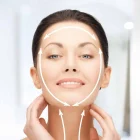
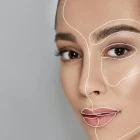
Unlike traditional facelifts that rely on skin tightening or manipulation of the SMAS layer, Spacelifting focuses on the natural anatomical compartments of the face — the “spaces” between muscles and ligaments that subtly shift with age.
The approach emphasizes:
Precise lifting of facial compartments to restore the youthful facial outlines and volume
Restoration of the cheekbone line and a well-defined V-shaped contour of the face and neck
Elimination of ptosis
Avoiding surface tension and distortion of facial features
Achieving long-lasting, elegant, and natural-looking results
This technique works from within, leveraging the body’s natural structure to rejuvenate the face — resulting in a refreshed, rested, and authentic appearance.
At the core of our method is a commitment to artistry, precision, and individualized care.
Each face is considered a unique work of art, with Spacelifting utilized not only to reverse aging but to enhance natural beauty with meticulous attention to detail. Dr. Ross and Dr. Nosova’s expertise continues to inspire surgeons across Europe and globally, setting a new standard in facial rejuvenation.
Learn more about Spacelifting
Indications
This technique works from within, leveraging the body’s natural structure to rejuvenate the face — resulting in a refreshed, rested, and authentic appearance.
At the core of our method is a commitment to artistry, precision, and individualized care.
Spacelifting effectively addresses the following age-related facial changes:
- Ptosis (sagging) of facial tissues in all regions except the forehead
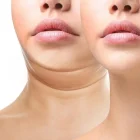
- Changes in the contour of the lower jawline and cheeks
- Volume loss and drooping in the midface, including the flattening of the cheekbone area, formation of malar bags, sagging cheeks, jowls, and the deepening of nasolabial folds
Procedure Overview
The procedure is performed under adaptive anesthesia, a specialized form of general anesthesia that combines intravenous sedation with local anesthesia for optimal patient comfort.
Typically, Spacelifting takes approximately 2–3 hours to complete and can be safely combined with other surgical procedures, such as blepharoplasty (eyelid surgery), rhinoplasty (nose surgery), or mammoplasty (breast surgery).
A discreet incision is made both behind the ear and within the auricular conha (inside the ear), which gradually becomes nearly imperceptible over time. The skin and SMAS (Superficial Muscular Aponeurotic System), a deeper layer of tissues, and the underlying facial tissues are repositioned to create a more youthful contour and then securely fixed. Next, excess skin is removed, enhancing the effect of the internal fixation.
This minimally invasive technique helps reduce the risk of complications, shortens the recovery period, and ensures a smooth, natural-looking result.
Recovery
- In the first 24 hours following the surgery, the patient remains under close medical supervision in the clinic. Discharge is typically allowed the day after the procedure. Sutures are removed, and the initial postoperative assessment is conducted between days five and seven, with additional follow-up visits scheduled as needed on an individual basis.
- Mild discomfort, swelling, and bruising are common during the first week and typically resolve within 5–7 days. Once these initial symptoms subside, patients may resume the use of makeup and return to social activities.
- For the first month postoperatively, patients are advised to refrain from vigorous physical activity, including gym exercises, swimming, sauna use, tanning, and prolonged sun exposure.
- While early signs of the results are visible within 4–5 weeks, the final effects of Spacelifting are best evaluated approximately 6 months following the procedure.
Benefits
Noticeable And Natural RESULT
Its you, But your years disappear from your face
Short Surgery
The duration of the surgery is typically 2-3 hours
Rehabilitation is 1-2 Weeks
Return to society with no visible traces of the operation after 7 days
Safety
The surgery has been extensively studied and is well tolerated by patients.
Sedation
Adaptive anesthesia, including light sedation.
Painless
Besides minor soreness, there is no pain after the surgery.
Invisible
Small and invisible postoperative suture.
Bandage
Wearing a bandage for 1-2 days.
Natural
Facial features stay the same, expressions remain natural and lively.
Unique
No other rejuvenation technique will give this effect.
natural & safe Process
Benefit 1.
AN allergic reaction
(NOT plural, has to be SINGULAR)
Benefit 2.
also, you have never mentioned blood before so bringing it up now might confuse people who don't understand surgery at all. As in a patient might think you're talking about blood transfusion which is scary so I'd strongly suggest rephrasing this point => i.e., Uses Your Own Body's Resources, Reducing The Risk of Any Allergic Reactions
Benefit 3.
also, you have never mentioned blood before so bringing it up now might confuse people who don't understand surgery at all. As in a patient might think you're talking about blood transfusion which is scary so I'd strongly suggest rephrasing this point =>i.e., Uses Your Own Body's Resources, Reducing The Risk of Any Allergic Reactions
Benefit 4.
prepositions (i.e., of) are NOT capitalized
Benefit 5.
Either dots at the end of each point or nothing. *I vote nothing
Benefit 6.
he last point has nothing to do with its title. The procedure being quick & it being invasive are two very different things. => re-title or re-write the body
More About Spacelifting
Contraindications
Spacelifting is a highly advanced facial rejuvenation technique; however, like any surgical procedure, it is not suitable for everyone. Below are general contraindications to Spacelifting:
- Uncontrolled chronic medical conditions, such as hypertension, diabetes mellitus, or cardiac disease
- Coagulation disorders or use of anticoagulant therapy that cannot be discontinued
- Active infections, including skin infections in the treatment area
- Autoimmune disorders that may impair healing or increase the risk of complications
- Severe smoking history or unwillingness to abstain from smoking pre- and postoperatively
- History of poor wound healing or keloid formation
- Current pregnancy or breastfeeding
- Psychological instability or unrealistic expectations regarding surgical outcomes
Frequently Asked Questions
Why is Spacelifting superior to traditional facelift techniques?
Unlike conventional facelifts, Spacelifting is based on a modern anatomical understanding of facial aging. It specifically targets age-related changes in the midface, jawline, and neck by lifting the deep facial compartments, not just the skin or superficial layers. The procedure is highly selective, treating only the areas that need correction. It is minimally invasive, offers faster recovery, and leaves minimal scarring while delivering natural-looking, long-lasting results.
What is the ideal age for undergoing Spacelifting?
Spacelifting is suitable for individuals showing early to advanced signs of facial aging. Most patients are between 35 and 80 years old, with the majority being between 45 and 55. More important than age is the patient’s perception of facial imbalance, when how you look no longer reflects how young and vibrant you feel.
How long is the recovery period, and when can I return to work?
Patients typically return to work within 7–10 days following surgery. Light daily activities may be resumed within two weeks, while full healing and recovery occur over two to six months.
Where are the incisions placed, and will there be visible scars?
Incisions are discreetly placed within the natural contours of the ear (auricular concha and auricular sulcus) in the temporal region. Over time, these scars become barely visible and typically do not require any special treatment or revision.
Can Spacelifting be combined with other procedures, such as blepharoplasty?
Yes. Spacelifting is a low-trauma procedure and is often performed in combination with eyelid surgery (blepharoplasty), rhinoplasty, breast surgery, or other aesthetic procedures as part of a comprehensive rejuvenation plan.
How long do the results of Spacelifting last?
When performed by an experienced surgeon, such as Dr. Ross or Dr. Nosova, Spacelifting results are long-lasting and often lifelong. No cases of surgical re-intervention have been reported within 15 years of follow-up. Any future age-related changes can typically be managed non-surgically with skin treatments, volume restoration (e.g., facial fat grafting), and appropriate hormone or skincare therapy.
How long will I stay in the clinic after the surgery?
Patients usually remain in the clinic for one to two days after the surgery. On the second day, bandages are removed, personal hygiene is restored, and a postoperative evaluation is performed. Suture removal is typically scheduled for days 5 to 10, depending on individual healing. A follow-up consultation is planned for the 1-month mark.
What is the difference between Deep Plane Facelift and Spacelifting?
While both techniques address deeper facial structures, the Deep Plane Facelift involves lifting both the skin and SMAS layer together, often requiring wide tissue dissection. Spacelifting, on the other hand, works within the natural anatomical “spaces” of the face, allowing for precise repositioning of facial compartments with minimal trauma. This results in a more natural, youthful appearance with faster recovery and less risk of distortion. Spacelifting is less invasive, more customizable, and designed to preserve facial identity while achieving long-lasting rejuvenation.
Endoscopic Brow Lift (Forehead Lift)
An endoscopic brow lift – also known as a forehead lift – is an excellent supplementary procedure to a facelift (Spacelifting) or a deep plane facelift. It can be performed as part of a full facial rejuvenation or as a standalone procedure focusing on the upper third of the face.
This minimally invasive technique elevates sagging brows, smoothes horizontal forehead lines, and restores a more youthful, refreshed appearance. A brow lift opens up the eye area, reduces heaviness in the upper eyelids, and softens an angry-looking or tired look.
Why consider a brow lift?
As we age, the soft tissues of the forehead begin to descend, often resulting in a heavy or fatigued expression. In some individuals, particularly men, a low brow position may be a natural anatomical feature. In many cases, brow ptosis contributes to upper eyelid laxity. In this case, upper eyelid surgery (blepharoplasty) alone may not adequately address the problem and can even worsen brow descent over time.
Ideal candidates are:
• Individuals with a tired, angry-looking, or heavy appearance around the eyes
• Patients with excess upper eyelid skin due to a low brow position
• Those bothered by horizontal forehead lines or deep frown lines
• People with brow asymmetry (one brow noticeably higher than the other)
• Anyone seeking rejuvenation of the upper third of the face
How the procedure is performed
The surgery is performed under a combination of IV and local anesthesia. Using three small incisions (approximately 1cm each) hidden within the hairline, the surgeon inserts a small camera (endoscope) and specialized instruments to lift and reposition the forehead tissues. The brow is then secured in an elevated position using internal fixation devices or absorbable anchors, which are placed discreetly beneath the scalp.
The procedure typically takes about 40 minutes, and most patients stay overnight for observation.
Recovery and results
Recovery from an endoscopic brow lift is typically quick and well-tolerated. Mild swelling and bruising may appear around the forehead and eyelid area, but usually resolve within a few days. Discomfort is minimal and easily managed with over-the-counter or prescribed pain medication.
Most patients return to work within 7 days following the surgery. While full recovery may take up to two months, residual swelling is generally mild and continues to improve over time. Temporary numbness in the forehead is a common part of the healing process and typically resolves within 3 to 4 months.